Open Skills Management Tool (OSMT)
- 1Runs onAPI, Linux, Mac, self-hosted, Web, Windows
- 2CostsFree plan
- 3Skill taxonomycustom
Overview
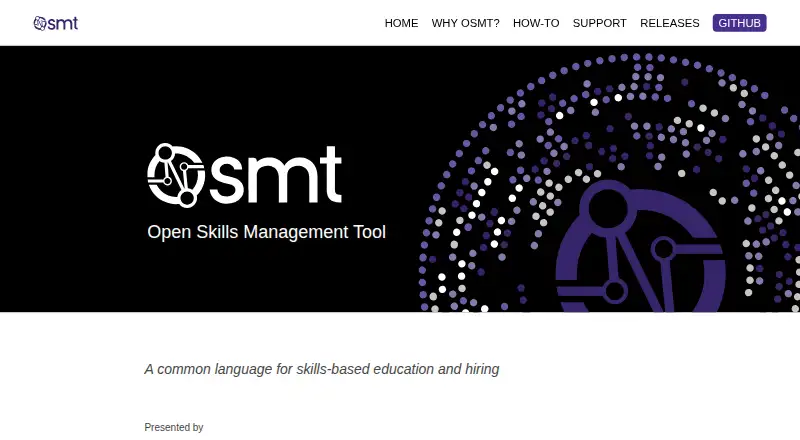
Open Skills Management Tool (OSMT) helps organizations create and share open libraries of skills for education and hiring. It uses the Rich Skill Descriptor standard, pairing skill statements with metadata such as keywords, occupation codes and alignments. Users can search, write, edit, organize and publish skills and collections, with branded hosting available for skills definitions. OSMT is open source under the Apache 2.0 license and can be self-hosted; it is listed for web, API, Linux, macOS and Windows use. Skills can be batch-imported from CSV, and published skills or collections can be exported in that format. The project supports OAuth2, including Okta and Google, and defines Admin, Curator and Viewer roles with different permissions. Its API supports anonymous searching and UUID filtering for skills. The local Quickstart is intended for evaluation, and its database should be treated as temporary; production deployment can vary by organization. Support is available through the open-source community, GitHub discussion forum, documentation and issue tracker.
Who it is for
OSMT suits employers, educators, military stakeholders and others building shared skills libraries for learning or hiring. It may also suit organizations that need to manage custom taxonomies and connect skills definitions to existing infrastructure.
What is good
- Supports search, authoring, editing and publishing.
- Imports and exports skills through CSV.
- Apache 2.0 licensed and open source.
- Defines Admin, Curator and Viewer roles.
- Supports OAuth2, including Okta and Google.
What to know first
- The local Quickstart database is temporary.
- Single-auth is only for local development and testing.
- Production deployment can vary by organization.
Specifiction review
Open Skills Management Tool (OSMT): the full review
OSMT provides tools to manage and share skills libraries using the RSD standard, with CSV exchange and role-based access. Treat its local Quickstart as an evaluation setup, not a production database.
OSMT is an open-source tool for creating and sharing structured skills libraries. It is best suited to organizations that want to maintain their own skills definitions; its free Apache 2.0 license is a strong advantage, but production deployment requires more care than the evaluation Quickstart.
Overview
Employers, educators, military organizations, and other stakeholders can use OSMT to search, author, edit, organize, and publish skills and collections. Its Rich Skill Descriptor (RSD) format attaches metadata such as keywords, occupation codes, and alignments to skill statements. A custom taxonomy lets each organization structure its library around its own needs, rather than adopt a fixed taxonomy.
OSMT provides branded hosting for skills definitions and is designed to fit into existing technology infrastructure. That makes it a focused option when skills content needs a shared home. It is less suitable for buyers seeking a broader talent-management system: its core job is managing and exchanging skills libraries.
Key features
Batch CSV import gives teams a way to load existing skills, while published skills and collections can be exported as CSV. This is useful for moving content between workflows, but CSV exchange alone does not guarantee compatibility with every external system.
The API supports searching; version 1.1.0 added anonymous searching and filtering by UUID. Those functions can support discovery and integration without requiring every search to be tied to an identified user. OSMT also supports OAuth2, including Okta and Google, and defines Admin, Curator, and Viewer roles with different permissions for skills and collections.
The README's single-auth option is intended only for local development and testing. It should not be used in production, staging, or internet-accessible environments. The local Quickstart is likewise an evaluation setup, with a database considered temporary; production deployment can vary by organization. That flexibility is useful to teams able to plan their own deployment, but the Quickstart is not a shortcut to a production-ready database.
Pricing
OSMT is free: the server-based software is available under the Apache 2.0 license at 0.00 USD per free. There are no paid tiers or stated seat or quota limits to weigh against the free plan. The trade-off is that organizations must account for their own production deployment choices. Support comes through the open-source community, GitHub discussion forum, documentation, and issue tracker.
Platforms
OSMT supports API, Linux, macOS, self-hosted, web, and Windows. The self-hosted option gives organizations room to choose a deployment that suits their environment; the breadth of platform support does not remove the need to configure production use appropriately.
Who it's for
OSMT suits employers, educational institutions, workers, learners, and other stakeholders who need to create or share skills libraries in a structured format. It is especially relevant when a team values custom taxonomies, RSD metadata, CSV exchange, and control over its deployment. Organizations that want a turnkey talent-management suite rather than a skills-library tool should look elsewhere.
Pros and cons
- Pro: Apache 2.0 open-source software is free, making OSMT a direct option for organizations that want to build and host skills libraries without a paid plan.
- Pro: RSD metadata and custom taxonomies support structured, organization-specific skills definitions.
- Pro: CSV import and export, plus API search, provide practical ways to move and find skills content.
- Con: The Quickstart database is temporary and the single-auth mode is unsuitable for production, so evaluation configuration should not be mistaken for a deployment plan.
- Con: The product focuses on skills libraries and collections, not a broader talent-management suite.
Alternatives
Skills Management Software is a useful place to compare more tools in the category.
Choose Skills Base instead if you want a freemium product with a web and API presence and a free tier capped at 250 skills and 25 users, with unlimited assessments, Skill Matrix Reports, and Skill Data Templates.
SkillsEngine offers a free personal account and a separately priced Advanced API add-on; consider it when that account-and-add-on structure better fits your needs.
Skima is another free, self-hosted option with Linux, macOS, web, and Windows support.
Talentguide has a free EUR sandbox capped at five seats, making it an alternative for a small evaluation group seeking its listed skills and workforce planning features.
Cornerstone Learning is a paid alternative with organization-specific pricing and support for Android, iOS, web, and API.
SkillsTX offers a free-for-life personal plan for individuals seeking a skills profile, career development plan, and self-paced SFIA awareness training.
DevLevelUp is another freemium option, including an individual plan described as free forever with no plans, limits, or card.
TalentGuard is a paid alternative with a free trial and API and web support.
Verdict
Choose OSMT if your organization wants a free, open-source way to create, structure, and share its own skills libraries, and can make deliberate production deployment decisions. Its strongest case is the combination of RSD, custom taxonomies, CSV exchange, and open licensing. Look elsewhere if you need a broader workforce platform or expect the local Quickstart to serve as a production setup.
Open Skills Management Tool (OSMT) plans and pricing
All plansCompared on skills management software
Facts
- Purpose
- OSMT helps employers, educators, military, and other stakeholders create and share open skills libraries for skills-based education and hiring.osmt.io · 4 Oct 2026
- Skill format
- OSMT uses the Rich Skill Descriptor (RSD) standard, which describes skill statements with associated metadata such as keywords, occupation codes, and alignments.osmt.io · 4 Oct 2026
- Core features
- Users can search, author, edit, organize, and publish skills and collections.osmt.io · 4 Oct 2026
- Hosting
- OSMT provides a branded hosting platform for skills definitions.osmt.io · 4 Oct 2026
- Interoperability
- The maker says OSMT is designed to fit into existing technology infrastructure.osmt.io · 4 Oct 2026
- License
- OSMT is open source and free under the Apache 2.0 license.osmt.io · 4 Oct 2026
- Import and export
- The guide describes batch importing skills from CSV and exporting published skills or collections as CSV.osmt.io · 4 Oct 2026
- API
- The release notes state that version 1.1.0 added anonymous API searching and filtering by UUID when searching for skills.osmt.io · 4 Oct 2026
- Authentication
- The project README says OSMT supports OAuth2, including Okta and Google, and offers a single-auth mode for local development.github.com · 4 Oct 2026
- Security configuration
- The README warns that single-auth is only for local development and testing and should not be used in production, staging, or internet-accessible environments.github.com · 4 Oct 2026
- Access roles
- The README describes Admin, Curator, and Viewer roles with different permissions for skills and collections.github.com · 4 Oct 2026
- Evaluation limitation
- The maker says the local Quickstart is for evaluation and its database should be considered temporary; production deployment can vary by organization.osmt.io · 4 Oct 2026
- Support
- Support is provided through the open-source community, GitHub discussion forum, documentation, and issue tracker.osmt.io · 4 Oct 2026
- Intended users
- The maker identifies employers, workers, learners, and educational institutions as stakeholders whose skills-related challenges OSMT addresses.osmt.io · 4 Oct 2026
Best Open Skills Management Tool (OSMT) alternatives
See all 20
Where it ranks on Specifiction
Is Open Skills Management Tool (OSMT) yours?
Claim it for free: prove the domain, then correct facts, plans and screenshots. An editor reviews every change.
Sources
- osmt.io· checked 4 Oct 2026
- osmt.io/docs.html· checked 4 Oct 2026
- osmt.io/release.html· checked 4 Oct 2026
- github.com/wgu-opensource/osmt/blob/develop/README· checked 4 Oct 2026
- osmt.io/support.html· checked 4 Oct 2026
- osmt.io/why-osmt.html· checked 4 Oct 2026